

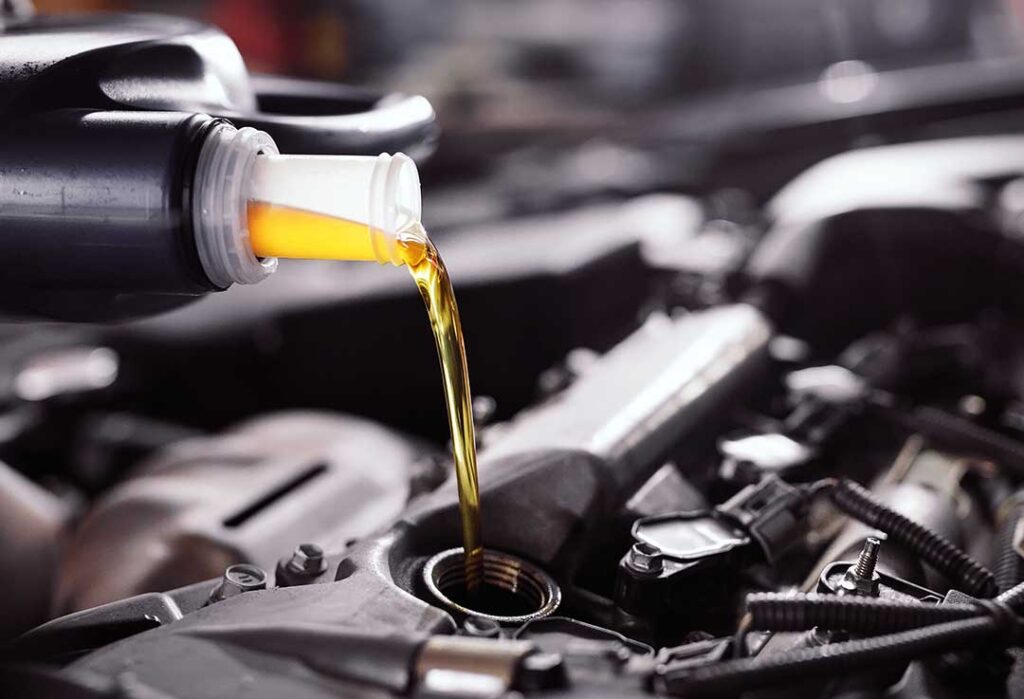
How often should engine oil be checked?
Engine oil should be checked at least once a month and before longer drives. A quick inspection can reveal low oil, dirty oil, leaks, or signs of engine trouble before a minor issue becomes expensive damage.
Drivers who make frequent short trips, sit in traffic, carry heavy loads, or drive during very hot weather may benefit from checking more often. These conditions can increase engine heat and place additional demands on the oil.
Modern vehicles may display an oil-life percentage or warning message, but those systems do not always replace a physical oil-level check. The oil-life monitor estimates how quickly the oil is degrading. It does not necessarily detect a low level caused by a leak or oil consumption.
What is the correct way to check the oil?
Park on level ground, turn off the engine, and wait several minutes before checking. The waiting period allows oil in the engine to drain back into the oil pan, where the dipstick can measure it more accurately.
Follow these steps:
- Open the hood and locate the engine oil dipstick. It usually has a brightly colored handle, but the owner’s manual is the best guide.
- Pull out the dipstick and wipe it clean with a paper towel or lint-free cloth.
- Push the dipstick fully back into its tube.
- Remove it again and hold it horizontally.
- Check whether the oil level falls between the two markings, often labeled “low” and “full” or represented by crosshatched lines.
- Wipe the dipstick and return it securely when finished.
The first reading may be uneven because oil can smear along the dipstick tube. That is why wiping and checking a second time matters.
Some vehicles do not have a traditional dipstick and instead use an electronic oil-level measurement system. These vehicles usually require specific steps, such as checking at a certain engine temperature or with the vehicle in a particular operating mode. The owner’s manual should be followed carefully.
What should the oil level look like?
The oil level should be within the marked range, preferably near the full line without going above it. If the oil is below the safe range, add the correct type gradually and recheck after each small amount.
Adding too much oil can also cause problems. Excess oil may become aerated by moving engine parts, reducing its ability to lubricate properly. If the level is noticeably above the full mark, the vehicle should not be driven unnecessarily until the excess is corrected.
Oil color alone does not determine whether it needs to be changed. Fresh oil may be amber or light brown, while used oil often becomes darker as it collects combustion byproducts and contaminants. Dark oil can still be serviceable, and relatively clean-looking oil may still be old or contaminated.
Pay attention to texture and smell as well. Oil that appears gritty, unusually thick, milky, or strongly contaminated deserves further attention. A milky appearance can indicate coolant entering the oil, although condensation and other conditions can sometimes create similar symptoms.
How often should oil be changed?
The correct oil-change interval depends on the vehicle, engine design, oil specification, driving conditions, and mileage. Many current vehicles use an interval somewhere between roughly 5,000 and 10,000 miles, but some require shorter or longer schedules.
The owner’s manual should take priority over general mileage rules. It may provide separate schedules for normal and severe service.
Severe-service conditions can include:
- Frequent trips of only a few miles
- Extensive idling or stop-and-go driving
- Towing or carrying heavy loads
- Repeated driving on dusty or unpaved roads
- Very hot or very cold operating conditions
- Long periods of vehicle storage
- Frequent high-speed or short-distance driving

The climate and driving patterns around Hiram can make seasonal maintenance useful. Hot summer temperatures, traffic delays, and short household trips can place more stress on engine oil than steady highway driving. A vehicle used mainly for brief errands may reach its oil-change interval based on time before mileage.
A common rule is to change oil at least according to the vehicle manufacturer’s time limit, even if the mileage is low. Many vehicles specify an annual maximum, while others call for service every six or twelve months.
Does the oil warning light mean an oil change is due?
Usually, no. The red oil-pressure warning light indicates a potentially serious lubrication problem, not a routine reminder. It may mean the engine has dangerously low oil pressure, which can result from low oil, a failing oil pump, a clogged passage, or another mechanical problem.
If the red oil-pressure light comes on while driving, pull over safely and shut off the engine as soon as practical. Check the oil level after the vehicle is parked on level ground. If the light remains on after adding the correct amount of oil, continued driving can cause severe engine damage.
A maintenance reminder or oil-life message is different. It generally indicates that routine service is approaching. It should not be confused with an emergency oil-pressure warning.
What are signs that oil is low or leaking?
Low oil may not always produce an obvious dashboard warning. Possible signs include ticking or knocking sounds, an unusual burning smell, visible oil spots, smoke near the engine, or an oil level that drops repeatedly between changes.
A few drops on the ground do not reveal the full size of a leak. Oil can travel along engine components or underbody panels before reaching the pavement. A vehicle that needs frequent oil additions should be checked rather than treated as normal.
Look for fresh brown or black fluid after the vehicle has been parked. Some other vehicle fluids can resemble oil, so fluid identification should be done carefully. Do not place hands near hot engine parts, belts, fans, or other moving components.
What type of oil should be used?
Use the viscosity and performance specification listed in the owner’s manual or on the oil-filler cap. A label such as “5W-30” describes viscosity, but the vehicle may also require a specific performance standard.
Using a different viscosity simply because it is convenient can affect cold-start lubrication, fuel economy, or engine protection. Oil should be added slowly through the oil-filler opening, and the cap should be replaced securely afterward.
Keep a record of the date, mileage, oil type, and amount added. This makes it easier to notice a pattern, especially if the engine begins using more oil between services.
When should an oil problem be treated as urgent?
Stop driving and seek qualified mechanical help if the oil-pressure warning stays on, the engine makes loud knocking sounds, oil is rapidly leaking, smoke is coming from the engine compartment, or the oil appears mixed with coolant or metal particles.
Routine oil checks take only a few minutes, but they can reveal conditions that dashboard electronics may not detect. Checking the level monthly, following the manufacturer’s service schedule, and paying attention to changes in oil use are practical habits for protecting an engine through year-round driving.