

What are the earliest signs that a car needs routine maintenance?
The first signs are often small: a dashboard reminder, a change in engine sound, slower braking, reduced fuel economy, or fluid spots under the vehicle. These clues do not always indicate a major failure, but they can show that normal maintenance is due.
Routine service is different from emergency repair. Maintenance includes inspections, fluid changes, filter replacement, tire care, battery testing, and other scheduled tasks designed to keep wear from becoming a breakdown. For residents in Hiram, regular attention can be especially useful because vehicles may face hot summers, heavy rain, pollen, short trips, and frequent stop-and-go driving.
How does the maintenance reminder light help?
A maintenance reminder usually tracks mileage or time since the last service. It may signal that an oil change, inspection, tire rotation, or other scheduled task is approaching.
The reminder is not the same as a check-engine light. A maintenance notification generally indicates routine service, while a check-engine light may point to an issue with the engine, emissions system, fuel system, or related electronics.
Because reminder systems vary, the owner’s manual is the best source for understanding a particular vehicle. If a reminder appears earlier than expected, it may reflect driving conditions, a reset error, or an overdue service interval.
What changes in driving feel suggest maintenance is due?
A vehicle that feels different from normal deserves attention, even if no warning light is illuminated. Common changes include:
- Steering that feels loose, heavy, or unusually difficult
- A brake pedal that feels soft, low, or harder than usual
- Shaking through the steering wheel or seat
- Pulling to one side during braking or normal driving
- Delayed acceleration or hesitation
- A rough idle or repeated stalling
- A transmission that shifts harshly, slips, or engages slowly
- A ride that bounces more than it used to
Some changes are caused by tire pressure or uneven tire wear, while others may involve brakes, suspension parts, fluids, or engine controls. A gradual change can be easy to ignore, but gradual wear can still affect safety and operating cost.
Do unusual sounds mean routine service is needed?
New sounds often provide an early warning. A brief squeak may be harmless, but repeated or worsening noises should not be dismissed.
A high-pitched squeal during braking can occur when brake friction material is worn or contaminated. A grinding sound may indicate metal-to-metal contact and should be treated as more urgent. Clicking during turns can be associated with a damaged axle joint, while clunking over bumps may involve suspension or steering components.
Whining, humming, or growling that changes with vehicle speed can come from tires, wheel bearings, belts, or other rotating parts. The location and timing of the sound matter. For example, a noise that occurs only while turning provides different information from one that continues while the vehicle is parked.
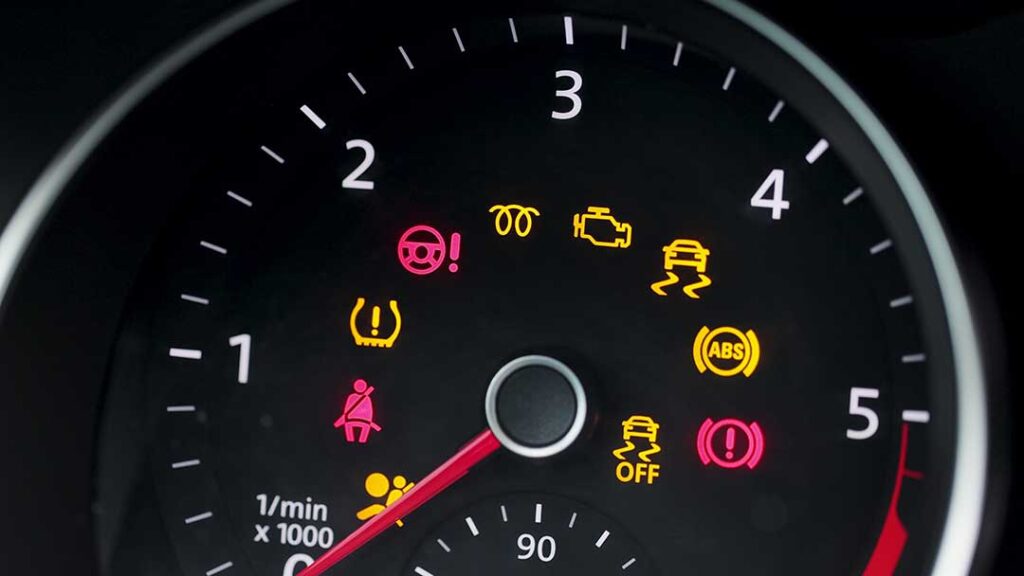
What warning lights should not be ignored?
Several dashboard lights can indicate routine maintenance or a developing problem:
- Oil pressure or oil level warning: Stop safely and check the owner’s manual. Continuing to drive with low oil pressure can cause severe engine damage.
- Tire-pressure warning: Check all tires when they are cold, including the spare if applicable. Temperature changes can alter pressure readings.
- Battery or charging warning: The charging system may not be maintaining the battery properly.
- Brake warning: The parking brake may be engaged, or the vehicle may have a brake-system or fluid problem.
- Check-engine light: A steady light should be diagnosed in a reasonable time. A flashing light generally requires prompt attention because continued driving may damage the engine or emissions components.
- Temperature warning: Pull over safely if the engine is overheating. Driving while overheated can result in major damage.
A dashboard light should never be covered, reset repeatedly, or ignored simply because the vehicle still seems to drive normally.
Can fluid leaks be a sign that maintenance is overdue?
Yes. A few drops may come from condensation, particularly from the air-conditioning system, but colored or oily fluid deserves closer inspection.
Fluid color can provide a rough clue, although modern vehicles use many different formulations. Engine oil is often brown or black, coolant may be brightly colored, and transmission or power-steering fluid may appear reddish, amber, or brown. Clear water near the front passenger area after air-conditioning use is commonly condensation.
Look for wet areas around the engine bay, beneath the vehicle, or near the wheels. A strong sweet smell, oily brake components, or a rapidly growing puddle should be treated as more than a routine reminder.
How do tires show that a vehicle needs attention?
Tires often reveal maintenance needs before the driver notices a handling problem. Check pressure at least monthly and before long trips, using the pressure listed on the vehicle’s door label rather than the number molded into the tire sidewall.
Signs of tire-related maintenance include:

- Uneven wear along one edge
- Bald areas or exposed cords
- Cracks in the sidewall
- Bulges or blisters
- Repeated loss of air
- Steering-wheel vibration
- A thumping sound that rises with speed
Hot weather, heavy rain, and road debris can all make tire condition more important. Adequate tread helps move water away from the contact patch, but it cannot compensate for excessive speed or unsafe road conditions.
What time-based maintenance is easy to forget?
Mileage is only part of a maintenance schedule. Some items age even when the vehicle is driven very little. Engine oil can degrade over time, batteries can weaken, and rubber components can crack from heat and age.
Often-overlooked items include:
- Cabin and engine air filters
- Wiper blades and windshield-washer fluid
- Brake fluid and coolant condition
- Battery terminals and battery age
- Belts, hoses, and visible rubber components
- Spare-tire pressure and emergency equipment
- Tire rotation and wheel alignment checks
Short trips can also be harder on a vehicle than steady highway driving because the engine may not reach full operating temperature. Repeated short journeys, extended idling, dusty roads, and heavy traffic may justify following the more demanding schedule in the owner’s manual.
When is a maintenance concern actually urgent?
A vehicle should be parked as soon as safely possible if it has a flashing warning light, serious overheating, a loss of braking ability, heavy smoke, a strong fuel smell, severe steering difficulty, or a rapidly worsening mechanical noise.
Less urgent symptoms still deserve timely attention. A small fluid leak, worn wiper, weak battery, underinflated tire, or overdue oil change may not stop a vehicle immediately, but delaying service can increase wear and leave the driver stranded later.
Keeping a simple record of service dates, mileage, warning lights, tire-pressure checks, and unusual symptoms makes it easier to spot patterns. That record also helps distinguish a one-time change from a developing maintenance problem.